
Meeting the changeover challenge

Courtesy US 8th Coast Guard District, photo by Petty Officer 2nd Class Bill Colclough.
The risk of power loss
IMO ended 2014 with a press release reminding the industry that as of 1st January, 2015 fuels containing no more than 0.10% sulphur must be used in ECAs, unless an approved alternative means of compliance, such as an Exhaust Gas Cleaning System is installed.
The regulation continued to spark much discussion throughout the year- delays in implementation, regulation enforcement, fuel changovers and the availability of compliant fuel were all subjected to lobbying, research, debate and speculation.
Amongst the hot topics, loss of engine power on switching from residual fuel to ECA compliant distillate is an issue that has the potential to be the most immediately damaging. A quick look at AIS data for ships in transit through the English Channel shows why.
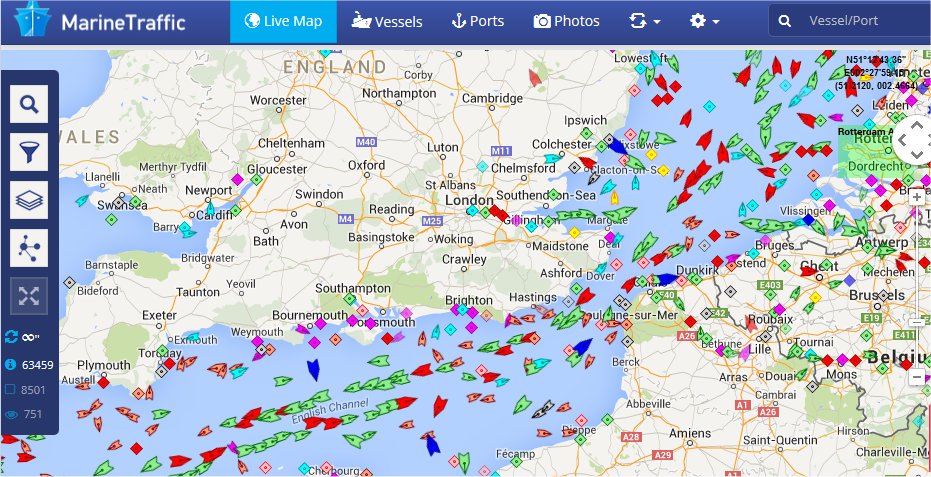
Courtesy MarineTraffic
California data shows the way
California has, of course had its own fuel rule requiring distillates to be used within 24 miles of the coast since July 2009. The requirement to use Marine Gas Oil or Marine Diesel containing no more than 0.10% sulphur came into force in January 2014 (* see footnote), so there is considerable experience with loss of power incidents related to fuel switching, albeit in less congested waters.
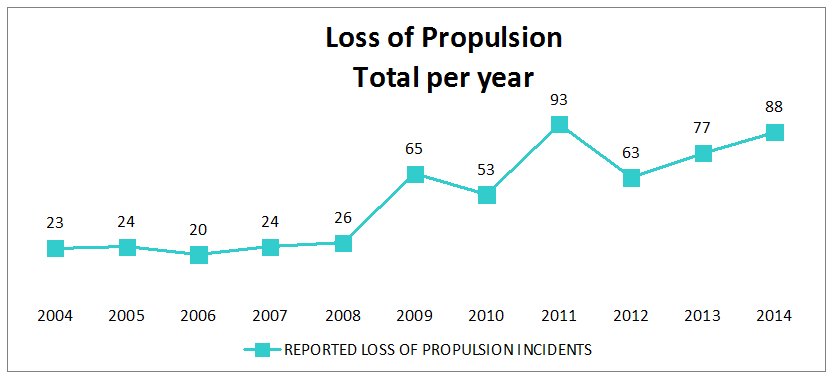
Courtesy California Department of Fish and Wildlife
Records from The California Department of Fish and Wildlife clearly demonstrate the increase in Loss of Propulsion incidents since implementation of the fuel rule. 125 have been directly linked to fuel switching since January 2009, and in 2014 alone, 14 incidents have resulted from fuel switching, with a further 26 suspected to be fuel related.
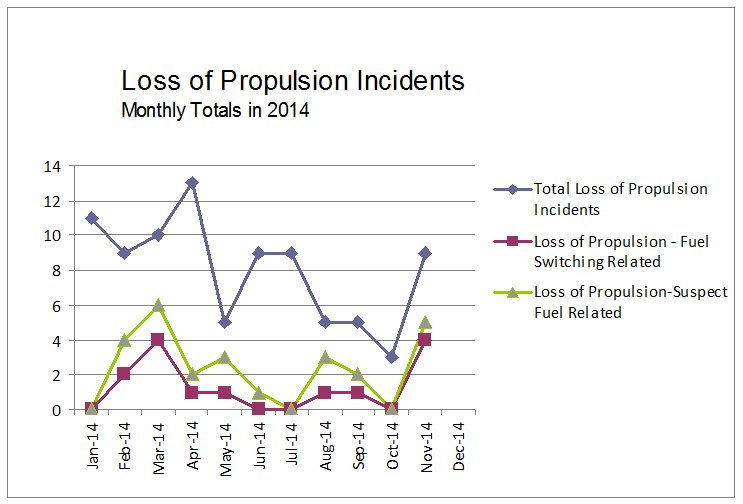
Courtesy California Department of Fish and Wildlife
California has found that LOP incidents often involve ‘first timers’ i.e. ships entering Californian waters for the first time, and that fatigue has caused errors in judgment which could contribute to a LOP incident. Unfortunately it seems very likely that there will be similar experiences in the North Sea ECA.
Categorization of the incidents shows the reasons behind a loss of power to be more than just the actual process of fuel switching.

Courtesy US Coast Guard District Eleven
Preparation and monitoring vital
The US Coastguard is clear in its advice to ship operators (kindly reproduced here) that advanced planning, preventive maintenance and training are critical to the proper operation of a vessel’s main engine and prevention of losses of propulsion.
Particular attention needs to be paid to fuel management to avoid a range of issues including:
- Cross-contamination of residual and distillate fuels leading to non-compliance and incompatibility,
- Thermal shock, loss of viscosity and vapour locks through inadequate temperature control
- Injection equipment malfunction damage or failure because of low fuel viscosity and low lubricity distillates
- Engine wear from incorrect cylinder oil BN or feed rate
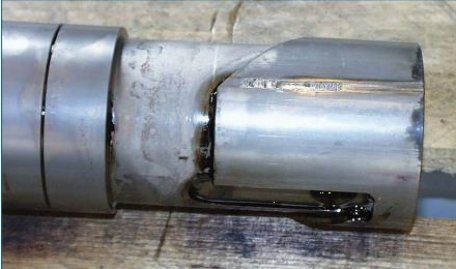
Damaged fuel injection pump plunger courtesy ECSA
Information and guides regarding the use of low sulphur distillate fuels are available from a wide variety of sources including administrators, classification societies, insurers, industry associations and OEMs. These should be regularly checked for updates. Recent examples from US EPA (publications from European administrations are harder to find!), the European Community Shipowners’ Association and EGCSA members, MAN B&W and Alfa Laval are kindly reproduced here.
In addition to national maritime administrations, online sources of regulatory information include:
- IMO:
https://www.imo.org/en/publications/Pages/Default.aspx - US EPA:
https://www.epa.gov/regulations-emissions-vehicles-and-engines/international-standards-reduce-emissions-marine-diesel - California Air Resources Board:
https://www.arb.ca.gov/ports/marinevess/ogv.htm - European Union:
https://transport.ec.europa.eu/news/cleaner-air-2020-05-sulphur-cap-ships-enters-force-worldwide-2020-01-09_en
https://ec.europa.eu/clima/eu-action/transport-emissions/reducing-emissions-shipping-sector_en
Footnote:
*In March 2014 California’s Air Resource Board amply demonstrated its willingness to enforce the fuel rule by publishing a list of ship operators that had been fined a total of nearly $500M for non-compliance. It will be interesting to see if Europe shows the same resolve in 2015!


